Which Side of Iguazu Falls Is Better: Argentina or Brazil? (2026)
I visited Iguazu Falls as part of my one-month South America itinerary. The plane from Rio de Janeiro circled above before landing and I could see the white mist rising out of the green forest like steam from a hole in the earth. I spent a full day on each side of the border and found they are far from the same experience. The Brazil side gives you wide panoramic views and the Devil’s Throat walkway, while the Argentina side gets you close up and even directly under the falls. But if you only have one day, which side of Iguazu Falls is better? Here’s my verdict.

This post may contain affiliate links. If you make a purchase, I receive a small commission at no extra cost to you. As an Amazon Associate I earn from qualifying purchases. For more information, read my disclaimer.
Quick overview of the Iguazu Falls
- If you can only do one side, go to Argentina for the trails and the boat ride under the falls.
- The Brazil side is great for its wide panoramic view and the Devil’s Throat walkway.
- Allow at least two days, one for each side, as the border crossing eats up time.
- With two days, start in Brazil and cross to Argentina on day two.
- Pack a swimsuit, quick-dry clothes and a waterproof phone case for the boat ride.
- The best time to visit is April-May or September-October, midweek and early.
- Bring your passport, as seeing both sides means crossing an international border.

Which side of Iguazu Falls is better?
I spent a full day on each side, and they left me with completely different feelings.
The Brazil side is all sweeping panoramic views: trails run along the forest wall and end at the Devil’s Throat walkway, where you can head out over the water and look straight into the U-shaped chasm.
The Argentina side gets you up close and even inside the falls, with upper and lower trails weaving between the rocks and islands, and a boat from the lower trail that takes you into the base of them.
So if you can only see one side, make it Argentina. The Brazilian panorama is beautiful, but nothing there matches the moment that boat drives you into the base of the falls and you lose track of which way is up.

How many days do you need for Iguazu Falls?
Unless you’re on an organised tour, a minimum of two days is essential for a complete Iguazu Falls itinerary. This allows you a full day to explore each side of the falls – this is really worthwhile as they are very different experiences. The Brazil side gives you spectacular panoramic views, while the Argentina side provides close-up encounters and thrilling adventures like the boat ride under the falls.
If you have more time, consider extending your stay to 3-4 days. This allows for additional activities such as a helicopter tour over the falls, exploring the surrounding rainforest trails and visiting the bird park.
I wouldn’t recommend trying to see both sides in one day. The border crossing between Brazil and Argentina can take time, and each side deserves proper attention to appreciate its unique perspective.
Two full days at Iguazu Falls is ideal to experience both the Brazil and Argentina sides. One day for each side allows you to explore at a relaxed pace, take the boat ride and walk all the trails. Otherwise, you’ll miss out on one side or spend more time dealing with border crossings than enjoying the falls.
Should you stay on Brazil or Argentina side of Iguazu Falls?
Staying on the Brazil side of Iguazu Falls in Foz do Iguaçu has several advantages. The city has better infrastructure with more hotel options across all budget ranges, from backpacker hostels to luxury resorts. From here you have easy access to the airport, as well as plenty of restaurants and nightlife. Personally, I started on the Brazil side as I flew in from Rio de Janeiro.
Meanwhile, Puerto Iguazú on the Argentina side is a much smaller city with charming local restaurants and a laid-back vibe. Your accommodation here can be right within the national park boundaries. If you’re continuing your journey to Buenos Aires by bus, like I was, this side makes more sense.
Where to stay in Foz do Iguaçu, Brazil
Hotels include the Bogari Hotel which has an on-site restaurant and the Belmond Hotel das Cataratas located right in front of the falls. If you are looking for a hotel closer to the airport, try the Complexo Eco Cataratas Resort.
Hostels in Foz do Iguaçu include the top-rated Concept Design Hostel & Suites, which has a swimming pool.
Check out the best hotels for Iguazu Falls from Brazil side by exploring the map below:
Where to stay in Puerto Iguazú, Argentina
Hostels in Puerto Iguazú include the Hospedaje Jose Gorgues or for a budget hotel, head to the Posada del Jacarandá, which has an outdoor pool.
Luxury hotels include the Gran Melia Iguazu and the Loi Suites Iguazu Hotel.
Check out accommodation deals for your dates in Puerto Iguazu via the map below:
Getting to Iguazu Falls
Iguazu Falls is accessible from both Brazil and Argentina, and it also borders Paraguay. Both Brazil and Argentina have nearby airports and gateway cities to this natural wonder. Most international travellers fly into either Brazil’s Foz do Iguaçu Airport (IGU) which is 30 minutes’ drive from the city of Foz do Iguaçu, or Cataratas del Iguazú International Airport (IGR) in Argentina, which a similar distance from Puerto Iguazú. The most convenient route for many visitors is flying from major South American cities like Rio de Janeiro or Buenos Aires. You can also travel there by long distance bus from major cities like Buenos Aires.
How to travel to Iguazu Falls from Brazil
The best way to get to Iguazu Falls from is to get a cheap flight from Rio de Janeiro, which takes 2 hours and 20 minutes.
My first sight of the Parque Nacional do Iguaçu was from the aeroplane. Just before arriving at the tiny Foz do Iguaçu airport, my flight from Rio de Janeiro circled the falls. This meant we could get a good look.
From high up you can see the heavily cascading water. It’s like you can almost hear it. White mist emanates from the green forests, like a steaming hole in the earth.

How to get to Iguazu Falls from Foz do Iguaçu
The easiest way to reach the Iguazu Falls from Foz do Iguaçu is to organise a transfer from your hotel.
If you are on a budget, you can reach the falls by local transport. Take the bus number 120 for Parque Nacional/Aeroporto. This bus departs from Terminal Transporte Urbano (TTU) in Foz do Iguacu city centre. The bus goes to the entrance of Iguazú National Park on the Iguazu Falls Brazil side, via the airport.

How to cross from the Brazil side to the Argentina side of Iguazu Falls
Go to the Terminal Transporte Urbano (TTU) in Foz do Iguacu. From here, you can catch a bus that will take you to the border with Argentina (don’t forget your passport!). On the other side, it connects with another bus that will take you to Puerto Iguazú.
How to travel to Iguazu Falls from Argentina
The easiest way in from Argentina is a flight from Buenos Aires to Cataratas del Iguazú Airport (IGR), which takes around 1 hour 45 minutes and lands you about 30 minutes from Puerto Iguazú. Flights leave from both Aeroparque and Ezeiza, so check which airport yours goes from before you book.
If you’d rather travel overland, long-distance buses run from Buenos Aires to Puerto Iguazú. It’s a long haul at roughly 18 hours, but Argentine coaches are comfortable, with fully reclining seats and meal service, plus it works out much cheaper than flying.
As I did this leg the other way round, I took the overnight bus from Puerto Iguazú to Buenos Aires after my trip to the falls.
How to get to Iguazu Falls from Puerto Iguazu
The bus from Puerto Iguazú to the Cataratas Argentinas stop, for the Iguazu Falls, is operated by Rio Uruguay. It runs every 20 minutes. The journey to the falls takes 20 minutes. Alternatively, you can book a tour of the Iguazu Falls directly from your hotel in Puerto Iguazú.
Visiting the falls from the Brazil side
From the Iguazú National Park entrance on the Brazil side of the falls, follow pretty trails along the forest wall. From here, you can view the scale and panorama of these impressive waterfalls, as well as the local wildlife.
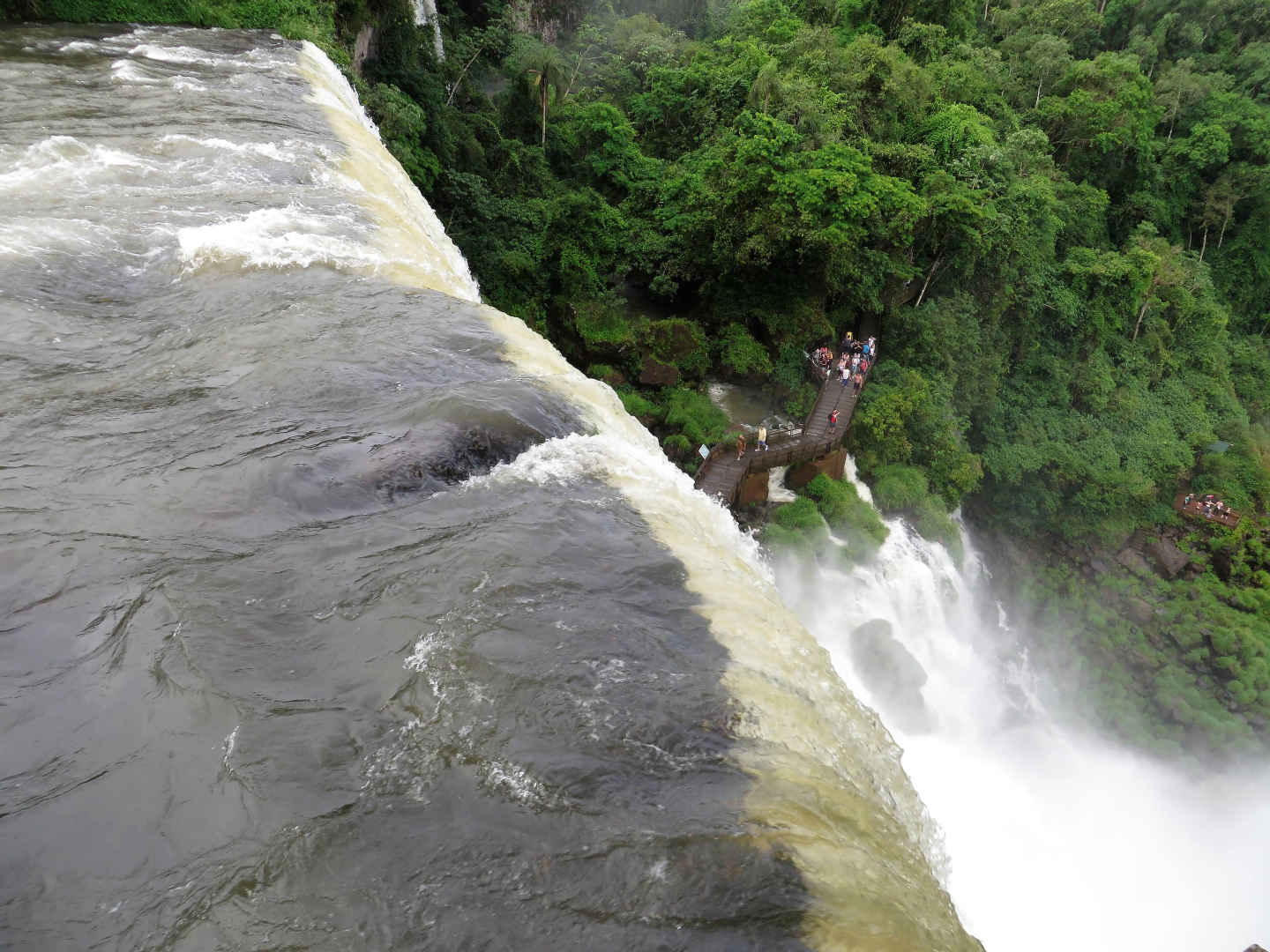
At the end you come to what’s known as Devil’s Throat. This is a U-shaped chasm where you can truly appreciate the sheer power and volume of this natural wonder. The falls cascade over cliff, bouncing off the shiny rocks and thrusting into the water below. It generates a gauze of cool white mist that seems to cover everything.
There is a walkway, where you can venture out and get a good view of Devil’s Throat head on. Needless to say, you get wet, but on a humid day, it is refreshing.

Visiting the falls from the Argentina side
The second day of this Iguazu Falls itinerary takes you to the Argentina side for a completely different but equally thrilling experience. On day 2, you’ll cross the border and check into your accommodation before getting up close and personal with the falls themselves. This side has extensive trail systems, intimate viewpoints and an unforgettable boat adventure. Prepare to get thoroughly soaked in the most exhilarating way possible.
From the Argentinian side, you can see the Iguazu Falls up close and personal, and even get inside them. Some of the views here are so beautiful, as the falls interweave with rocks, islands and greenery.

This side of the falls offers an upper and lower trail. The lower trail leads to a boat launch station. Here, you wrap your belongings carefully in a waterproof sack, don your choice of swimwear or cagoule and prepare for a watery onslaught. The boat’s driver takes you through the damp mist to the base of the powerful falls. He then travels inside them.
As the white water slaps forcefully onto your head and all over you, you feel like you can no longer make out which way is up and it’s hard to even open your eyes. The second part of the falls we venture into is even more of a shock with the sheer weight of the water on top of us. What an experience. Drenched, exhilarated and happy, you can take the rest of the walking trails to dry off.

From the upper trail you see so many astounding sights of this wondrous natural spectacle, from a variety of angles. If you’re like me, you’ll take so many photos, you’ll almost run out of space on your phone or camera.
What to wear to Iguazu Falls
There are a few things you’ll need to pack and what to wear to make the most of your trip to the amazing Iguazu Falls.
In terms of clothes, a bathing suit is recommended for the boat trip where you go under the cascading water. Quick-dry clothing is essential as you’ll get soaked, especially on the Argentina side. I wore quick-dry hiking sandals, which were comfortable for walking along the forest trails and it didn’t matter if they got wet. A lightweight rain jacket will keep you comfortable during any sudden downpours. Overall, when deciding what to wear to Iguazu Falls, make sure it’s made of light fabric that will keep you comfortable in the humidity and dry quickly if it gets damp from the misty air.
With regards to other items to pack, a waterproof phone case is also a good idea to protect your device. Insect repellent is also crucial in this tropical environment. Don’t forget high SPF sunscreen as the tropical sun is intense, even through the forest canopy. The number one thing to take with you is your passport so you can cross the border and see the other side of these magnificent falls.
The best time to visit Iguazu Falls
The Iguazu Falls are situated in the tropical rainforest of Iguazu National Park. This means the climate here is hot and humid, with an abundance of rain, depending on what time of year you go. There are two factors to consider when deciding on the best month to visit Iguazu Falls. One is the weather. The other is the number of tourists likely to be visiting at the same time as you.
The best time to visit Iguazu Falls is in the shoulder months between these seasons – so from April to May or between September and October. It’s not as hot during these months and less rainy, so it’s more comfortable weather to visit. There will also be fewer tourists at this time.
If you’re wondering which day to visit Iguazu Falls, Monday to Friday is best. Early morning is ideal to avoid crowds and heat. The parks open around 9am on both sides so arrive early if you can for better photo opportunities and shorter queues for the boat rides.
Frequently asked questions about Iguazu Falls
Which side of Iguazu Falls is best to see?
If you can only see one, the Argentina side. It has the most trails and the boat ride that takes you into the base of the falls. The Brazil side is best for the single panoramic view. With two days, see both.
Is it worth seeing both sides of Iguazu Falls?
Yes, if you have two days. They’re different enough that one doesn’t replace the other – Brazil gives you the wide panorama, Argentina gets you up close and under the falls. Even after a full day on each, I didn’t feel I’d seen the same thing twice.
How long do you need on the Brazilian side of Iguazu Falls?
Half a day is enough. The Brazil side is compact, with one main trail along the forest wall ending at the Devil’s Throat walkway, so you can see it comfortably in a morning. That’s why it works well as your first day, before crossing to the larger Argentina side.
When is the worst time to visit Iguazu Falls?
The peak of summer, December to February, is the least comfortable – hot, humid and busiest with local holidaymakers. Aim instead for the shoulder months of April-May or September-October for cooler weather and thinner crowds.
Which is the nearest airport to Iguazu Falls?
There are two, one on each side. Foz do Iguaçu Airport (IGU) serves the Brazil side and Cataratas del Iguazú Airport (IGR) serves the Argentina side, each about a 30-minute drive from its town. Fly into whichever side you’re starting on.
Final thoughts on the Iguazu Falls
Visiting the Iguazu Falls was easily one of the highlights of my South America trip. I wondered whether two days there would leave me feeling waterfalled-out. Would another full day feel repetitive? Far from it. The Argentina side delivered a completely different, more visceral experience – especially the boat ride under the falls.
Starting on the Brazil side then crossing over to the Argentina side, it tells a story. From the Brazil side’s stunning scale and sweeping views of the falls, to a second day over in Argentina where you get up close and personal – so much more immersive and physical. And wet!
It’s actually the perfect place to pass between these two countries on your South America itinerary, as it turns a simple border crossing into something truly spectacular and memorable.